Monday, September 1, 2025

CE Marking for Electrical Enclosures: A Complete Guide to EU Compliance

 Electrical enclosures are essential for protecting electrical components from environmental hazards. If you manufacture or sell these products in the European Union (EU), CE marking is mandatory. This certification ensures your enclosures meet strict EU safety, health, and environmental standards.
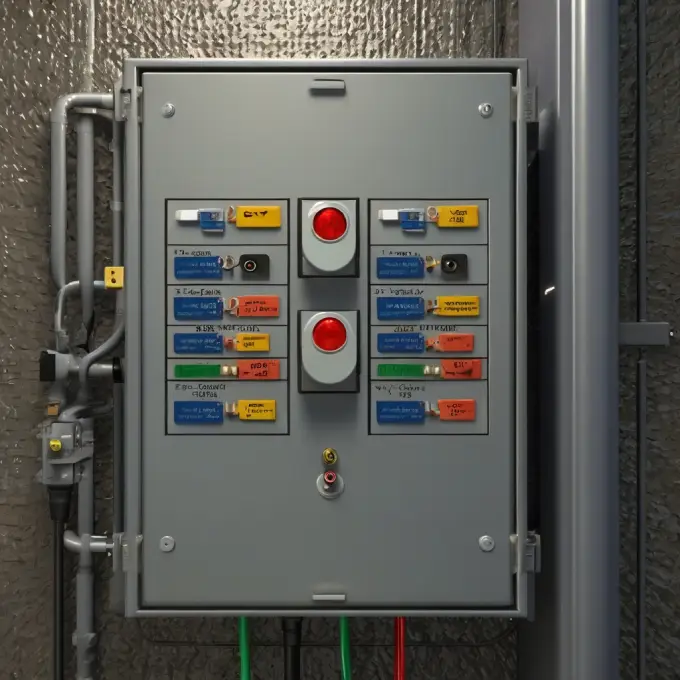
ce making for an enclosure

In this guide, we’ll cover:

  • What CE marking means for electrical enclosures
  • Key EU directives and standards
  • Steps to achieve compliance
  • Testing and documentation requirements
  • Common mistakes to avoid

Why is CE Marking Required for Electrical Enclosures?

ce making and enclosure

CE marking indicates that your product complies with EU regulations, allowing free movement within the European Economic Area (EEA). Without it, your electrical enclosures cannot be legally sold in the EU.

Key Directives & Standards for Electrical Enclosures

  1. Low Voltage Directive (LVD) 2014/35/EU – Ensures electrical safety.
  2. EMC Directive 2014/30/EU – Covers electromagnetic compatibility.
  3. Machinery Directive 2006/42/EC – Applies if the enclosure is part of machinery.
  4. EN 62208 Standard – Specific to empty enclosures for electrical components.

Steps to Obtain CE Marking for Electrical Enclosures

  1. Identify Applicable Directives – Determine which EU laws apply to your product.
  2. Conformity Assessment – Perform necessary tests (e.g., insulation, impact resistance).
  3. Technical Documentation – Prepare a Technical File with design specs, risk assessments, and test reports.
  4. EU Declaration of Conformity (DoC) – A legally binding document stating compliance.
  5. Affix the CE Mark – Place the CE logo visibly on the product or packaging.

Common Mistakes to Avoid

  • Incorrect Directive Application – Using the wrong standards can lead to non-compliance.
  • Incomplete Technical File – Missing documentation can delay market access.
  • Self-Certification Without Proper Testing – Some products require third-party testing.

Conclusion

CE marking for electrical enclosures is crucial for EU market access. By following the correct directives, conducting necessary tests, and maintaining proper documentation, manufacturers can ensure compliance and avoid legal issues.

Need help with CE certification? Consult an expert to streamline the process!

More info. CE Making web site
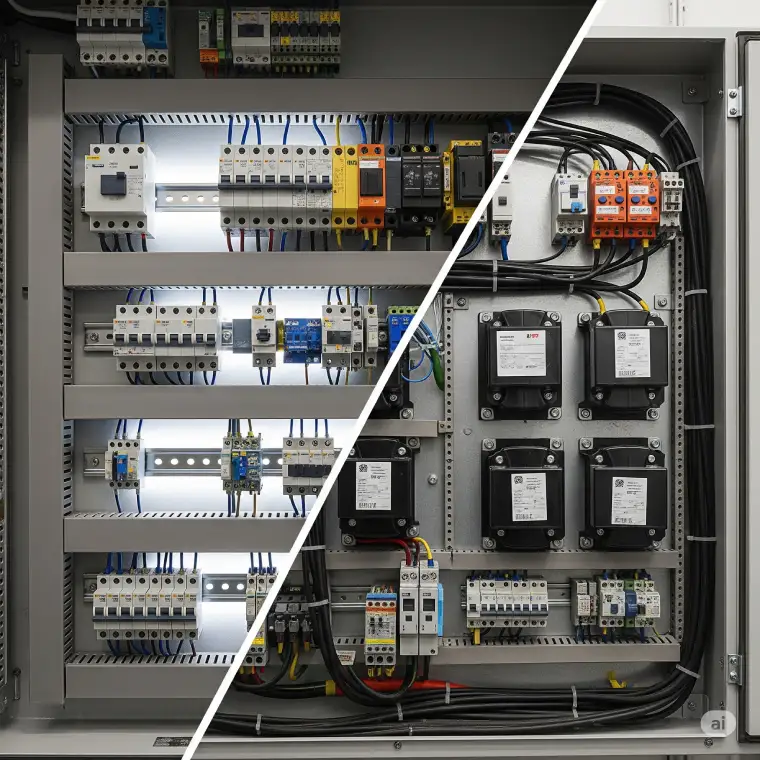
DIN Rail vs Back Panel Mounting: The Ultimate Guide for Engineers


DIN Rail vs Back Panel Mounting: Which Solution Fits Your Project?

Hey there, fellow engineers and DIY enthusiasts! If you’ve ever wrestled with mounting electrical components, you know the struggle: DIN rail vs back panel mounting can feel like choosing between coffee and espresso both work, but one might suit your setup better. Whether you’re building a control panel, industrial machine, or home automation system, this choice impacts cost, flexibility, and long-term headaches. Let’s break down these two contenders so you can pick your champion.

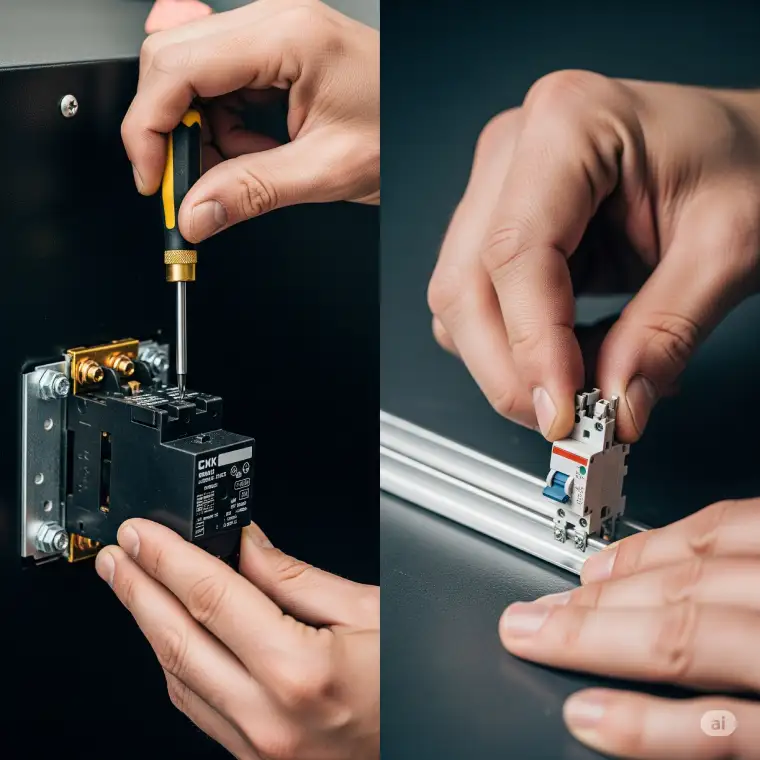
DIN rail vs back panel mounting comparison in control panel

Meet the Contenders: What Are DIN Rail and Back Panel?

Before we dive into the showdown, let’s get friendly with our options.

DIN Rail Mounting
Picture a slim, standardized metal rail (usually 35mm wide) that acts like a "plug-and-play" backbone for electrical components. Think circuit breakers, terminals, and PLCs snapping into place like Lego bricks. Born in Germany (hence Deutsches Institut für Normung), it’s the go-to for modular setups.

Back Panel Mounting
Here, components bolt directly onto a sturdy plate (often aluminum or steel). It’s the "old reliable" of industrial design—no rails, just screws and elbow grease. Ideal for heavy-duty gear that needs zero wiggle room.


DIN Rail vs Back Panel: The 5-Point Face-Off

Let’s compare these titans where it matters most:

1. ⚡ Installation Speed & Ease

DIN Rail: Snap-on components = fewer tools + faster swaps. Perfect if you’re racing deadlines or love tidy setups.
Real Talk: Newbies adore how forgiving it is. Miss a part? Just slide it off!

Back Panel: Demands precision drilling and screwing. Better for permanent installs but eats hours.
Watch Out: One misaligned hole means starting over.

Winner: DIN rail for agility.

2. 💰 Cost & Scalability

DIN Rail: Rails are cheap ($5–$20), and adding/modifying gear costs pennies. Need to upgrade? Pop in a new module.
Back Panel: Lower initial hardware cost (just the panel), but labor/time expenses add up. Scaling drilling chaos.

Winner: DIN rail for growing projects.

3. 🛡️ Durability & Vibration Resistance

DIN Rail: Handles moderate shakes but can rattle loose in extreme environments (e.g., heavy machinery).
Back Panel: Unbeatable for rock-solid stability. Bolted parts laugh at vibrations.

Winner: Back panel for rugged, high-impact zones.

4. 🔧 Maintenance & Repairs

DIN Rail: Swap faulty parts in seconds. No dismantling the whole system!
Back Panel: Fixing one component might mean disassembling neighbors.

Winner: DIN rail for easy-peasy upkeep.

5. � Space Efficiency

DIN Rail: Vertical stacking saves real estate. Great for cramped panels.
Back Panel: Spread-out layouts hog space but avoid "component congestion."

Winner: DIN rail for tight spots.


When to Choose Which: Your Cheat Sheet

Still torn? Match your project’s personality:

✅ Pick DIN Rail If You Need

  • Quick changes (labs, prototypes)
  • Budget-friendly scalability
  • Clean, modular aesthetics

✅ Pick Back Panel If You Need

  • Maximum durability (mining, automotive)
  • Heavy components (transformers, large relays)
  • "Set it and forget it" permanence

Pro Tip: Many pros hybridize! Use back panels for anchors and DIN rails for modular bits.


The Final Verdict

So, DIN rail vs back panel mounting who takes the crown? It’s a tie sort of.

  • DIN rail shines for flexibility, speed, and evolving setups.
  • Back panel rules for brute strength and "install once" projects.

Your mission? Audit your project’s needs:

🔧 Tinkering with a home solar inverter? DIN rail’s your buddy.
🏭 Building a factory robot? Back panel won’t quit.

Whichever you choose, remember: the best mount is the one that saves you sweat, time, and cash down the road. Happy building!

Verified Assemblies Under IEC 61439: Replacing TTA/PTTA

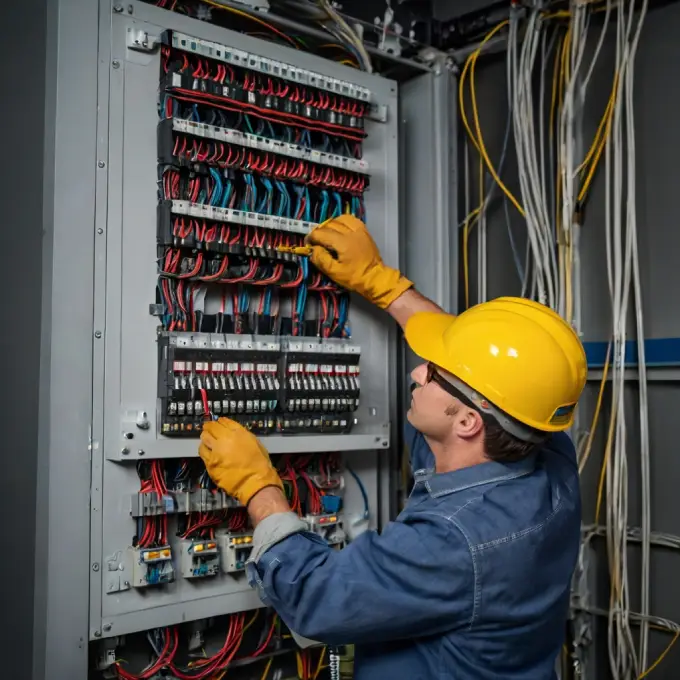
 Verified Assemblies Under IEC 61439, panelboard checking by the engineer

The shift from Type Tested Assemblies (TTA) and Partially Type Tested Assemblies (PTTA) to Verified Assemblies under IEC 61439 marks a significant evolution in low-voltage switchgear and controlgear standards. For enclosure manufacturers, panel builders, and electrical engineers, understanding this transition is crucial for compliance, safety, and performance optimization.

At EnclosureExpert.com, we specialize in helping professionals navigate these changes. In this article, we’ll explore:

  • Why IEC 61439 replaced TTA/PTTA
  • Key differences between old and new verification methods
  • How Verified Assemblies improve safety and reliability
  • Best practices for compliance

Why Did IEC 61439 Replace TTA/PTTA?

The IEC 60439 standard (predecessor to IEC 61439) had several shortcomings:

  1. Ambiguity in Responsibility – The roles of Original Manufacturers (OEMs) and Assembly Manufacturers (panel builders) were unclear, leading to compliance gaps 4.
  2. Limited Scope – TTA/PTTA classifications didn’t cover all assembly variations, leaving some untested 2.
  3. Inconsistent Testing – Many assemblies worldwide (up to 80%) were non-compliant due to vague requirements 4.

IEC 61439 addressed these issues by introducing Verified Assemblies, ensuring:
✔ Clearer accountability (who tests what)
✔ More rigorous verification methods (testing, calculation, design rules)
✔ Better traceability (documentation requirements)


Key Differences: TTA/PTTA vs. Verified Assemblies

AspectTTA/PTTA (IEC 60439)Verified Assemblies (IEC 61439)
TerminologyType Tested / Partially TestedVerified (design & routine tests)
ResponsibilityUnclear rolesOEM (design verification) + Panel Builder (routine verification) 4
Testing MethodsLimited type-testing3 Verification Methods: Testing, Calculation, Design Rules 14
DocumentationMinimal requirementsStrict records for traceability & compliance 1
FlexibilityRigid categoriesAdaptable to custom assemblies

How Verified Assemblies Under IEC 61439 is Improve Safety & Reliability

1. Enhanced Verification Processes

Under IEC 61439, assemblies must pass 12 key tests, including:

  • Temperature rise (critical for heat dissipation) 14
  • Short-circuit withstand (prevents fire hazards) 1
  • Dielectric strength (ensures insulation integrity) 14
  • Mechanical impact (IK rating) (durability of enclosures) 14
2. Clearer Roles & Accountability
  • Original Manufacturer → Validates design via testing/calculations.
  • Assembly Manufacturer → Conducts routine verifications (e.g., torque checks, IP ratings) 4.
3. Future-Proofing for New Technologies
  • Supports photovoltaic (PV) systems and EV charging stations, requiring RDF (Rated Diversity Factor) = 1 for continuous loads 8.

Best Practices for Compliance with Verified Assemblies

Verified Assemblies Under IEC 61439, panelboard transportation
  1. Use Pre-Verified Components
    • Leverage OEM-tested busbars, enclosures, and switchgear (e.g., Wöhner’s pre-calculated short-circuit ratings) 1.
  2. Maintain Detailed Documentation
    • Keep records of design verifications, test reports, and conformity declarations 4.
  3. Follow Routine Verification Checklists
    • Ensure IP ratings, torque settings, and grounding meet standards 10.
  4. Utilize Digital Tools
    • Software like Wöhner’s configurator helps verify current-carrying capacity and short-circuit ratings 1.

Conclusion: Why This Matters for Enclosure Experts

The shift from TTA/PTTA to Verified Assemblies under IEC 61439 ensures:
✅ Higher safety standards (reducing fire/electrical risks)
✅ Better-defined responsibilities (avoiding compliance gaps)
✅ More adaptable testing (supporting custom designs)

For enclosure manufacturers and panel builders, adopting these changes means fewer failures, longer product lifespans, and compliance with global standards.

Need expert guidance on IEC 61439 compliance?
📩 Contact EnclosureExpert.com for tailored solutions!

Friday, August 29, 2025

CE Marking for Electrical Enclosures: A Complete Guide to EU Compliance

 Electrical enclosures are essential for protecting electrical components from environmental hazards. If you manufacture or sell these products in the European Union (EU), CE marking is mandatory. This certification ensures your enclosures meet strict EU safety, health, and environmental standards.

ce making for an enclosure

In this guide, we’ll cover:

  • What CE marking means for electrical enclosures
  • Key EU directives and standards
  • Steps to achieve compliance
  • Testing and documentation requirements
  • Common mistakes to avoid

Why is CE Marking Required for Electrical Enclosures?

ce making and enclosure

CE marking indicates that your product complies with EU regulations, allowing free movement within the European Economic Area (EEA). Without it, your electrical enclosures cannot be legally sold in the EU.

Key Directives & Standards for Electrical Enclosures

  1. Low Voltage Directive (LVD) 2014/35/EU – Ensures electrical safety.
  2. EMC Directive 2014/30/EU – Covers electromagnetic compatibility.
  3. Machinery Directive 2006/42/EC – Applies if the enclosure is part of machinery.
  4. EN 62208 Standard – Specific to empty enclosures for electrical components.

Steps to Obtain CE Marking for Electrical Enclosures

  1. Identify Applicable Directives – Determine which EU laws apply to your product.
  2. Conformity Assessment – Perform necessary tests (e.g., insulation, impact resistance).
  3. Technical Documentation – Prepare a Technical File with design specs, risk assessments, and test reports.
  4. EU Declaration of Conformity (DoC) – A legally binding document stating compliance.
  5. Affix the CE Mark – Place the CE logo visibly on the product or packaging.

Common Mistakes to Avoid

  • Incorrect Directive Application – Using the wrong standards can lead to non-compliance.
  • Incomplete Technical File – Missing documentation can delay market access.
  • Self-Certification Without Proper Testing – Some products require third-party testing.

Conclusion

CE marking for electrical enclosures is crucial for EU market access. By following the correct directives, conducting necessary tests, and maintaining proper documentation, manufacturers can ensure compliance and avoid legal issues.

Need help with CE certification? Consult an expert to streamline the process!

More info.

Thursday, August 28, 2025

Top 10 Industrial Panel Manufacturers in 2025 – Expert Reviews & Comparison

 Industrial panels (HMI, PLC, and control panels) are crucial for automation and machinery control. With so many manufacturers in the market, choosing the right one can be challenging. In this guide, we review the top 10 industrial panel manufacturers in 2025, comparing their features, reliability, and pricing to help you make an informed decision.


1. Siemens

  • Overview: Leading in automation technology, Siemens offers high-performance industrial panels with advanced HMI capabilities.
  • Key Features:
    • Rugged design for harsh environments
    • Intuitive touchscreen interfaces
    • Seamless integration with Siemens PLCs
  • Best For: Large-scale industrial automation

2. Schneider Electric

  • Overview: Known for energy-efficient solutions, Schneider Electric provides durable and user-friendly industrial panels.
  • Key Features:
    • EcoStruxure compatibility
    • High-resolution displays
    • Strong cybersecurity features
  • Best For: Smart factories & energy management

3. Rockwell Automation (Allen-Bradley)

  • Overview: A top choice for North American industries, Rockwell’s PanelView series is highly reliable.
  • Key Features:
    • Robust build quality
    • Easy integration with ControlLogix PLCs
    • Wide range of screen sizes
  • Best For: Manufacturing & process control

4. Mitsubishi Electric

  • Overview: Mitsubishi’s GOT series panels are known for precision and durability.
  • Key Features:
    • High-speed processing
    • Multi-language support
    • Energy-efficient models
  • Best For: Automotive & electronics industries

5. ABB

  • Overview: ABB’s industrial panels excel in heavy-duty applications.
  • Key Features:
    • Modular design for customization
    • Excellent thermal management
    • Long lifecycle support
  • Best For: Oil & gas, power plants

6. Omron

  • Overview: Omron provides cost-effective yet high-performance industrial panels.
  • Key Features:
    • Compact and space-saving designs
    • Advanced touch sensitivity
    • Strong after-sales support
  • Best For: Small to medium enterprises (SMEs)

7. Bosch Rexroth

  • Overview: Specializing in motion control, Bosch Rexroth panels are ideal for precision machinery.
  • Key Features:
    • High durability in extreme conditions
    • Easy programming with IndraWorks
    • IoT-ready solutions
  • Best For: CNC & robotics applications

8. Honeywell

  • Overview: Honeywell’s industrial panels are widely used in process industries.
  • Key Features:
    • Intuitive UI for quick operations
    • High resistance to vibrations
    • Excellent real-time monitoring
  • Best For: Chemical & pharmaceutical sectors

9. Beckhoff Automation

  • Overview: Known for innovation, Beckhoff offers ultra-fast industrial panels.
  • Key Features:
    • PC-based control technology
    • Multi-touch capacitive screens
    • Seamless EtherCAT integration
  • Best For: High-speed automation

10. Weintek

  • Overview: A budget-friendly option without compromising quality.
  • Key Features:
    • Wide range of connectivity options
    • User-friendly HMI software
    • Strong global support
  • Best For: Cost-conscious buyers

Top 10 Industrial Panel Manufacturers Comparison Table

ManufacturerBest ForKey StrengthPrice Range
SiemensLarge industriesHigh durability$$$
Schneider ElectricSmart factoriesEnergy efficiency$$
Rockwell AutomationManufacturingSeamless integration$$$
Mitsubishi ElectricAutomotivePrecision control$$
ABBHeavy industriesModular design$$$
OmronSMEsAffordable$
Bosch RexrothRoboticsHigh precision$$
HoneywellProcess controlVibration-resistant$$$
BeckhoffHigh-speed automationPC-based control$$$
WeintekBudget buyersGood value$

How to Choose the Right Industrial Panel?

  • Environment: Harsh conditions need rugged panels (IP65+).
  • Integration: Ensure compatibility with existing PLCs.
  • Budget: Balance cost with long-term reliability.
  • Support: Check warranty and after-sales service.

Final Verdict

The best industrial panel manufacturer depends on your specific needs. Siemens and Rockwell Automation lead in reliability, while Omron and Weintek offer great budget options. For smart factories, Schneider Electric is a top pick.

Wednesday, August 27, 2025

Ultimate Guide to Short Circuit Withstand Testing on Electrical Panels (IEC 61439 Compliance)

 Electrical panels are the backbone of power distribution systems, and their ability to withstand short circuits is crucial for safety and operational continuity. Short circuit withstand testing, as mandated by IEC 61439, ensures that switchgear and controlgear assemblies can endure extreme fault currents without catastrophic failure.

This guide explores:
✔ Why short circuit withstand testing is essential
✔ Key test requirements under IEC 61439
✔ Types of tests (Icw, Icc, STC)
✔ Best practices for compliance


Why Short Circuit Withstand Testing Matters

A short circuit can unleash destructive thermal and mechanical forces, leading to:

IEC 61439-1 (Clause 10.11) defines rigorous testing to prevent these risks by verifying a panel’s ability to handle fault currents without deformation or failure.


Key Tests Under IEC 61439

1. Icw Test (Withstand Peak Current)
  • Evaluates electrodynamic forces on busbars during a short circuit.
  • Peak current = 2.1× RMS current (for ≤50kA) or 2.2× (for >50kA) 12.
  • Ensures busbars and supports resist bending or breaking.
2. Icc Test (Conditional Short Circuit)
3. Short-Time Current (STC) Test
  • Checks thermal endurance at 50kA for 1 second or 85kA for 0.1s.
  • Prolonged tests (e.g., 3 seconds) impose stricter thermal demands 18.

Compliance & Best Practices


Conclusion

Short circuit withstand testing is non-negotiable for safety, reliability, and compliance. By adhering to IEC 61439, manufacturers and engineers can prevent catastrophic failures and ensure long-term system integrity.

Need certified switchgear? Explore Schneider Electric’s Prisma panels, tested up to 100kA for unmatched safety.

NEMA Rating Explained

 A NEMA Rating Complete Guide for Engineers, Electricians, and Buyers

Robot with rusted panel board

⚡ Why NEMA Ratings Are Critical for Your Electrical Systems

Every year, thousands of electrical failures occur because equipment was housed in the wrong enclosure. Whether you're an engineer specifying components for a factory, an electrician installing outdoor panels, or a DIY protecting home automation systems, understanding NEMA ratings is essential for:

✔ Equipment longevity - Prevent corrosion and water damage
✔ Safety compliance - Meet OSHA and NEC requirements
✔ Cost savings - Avoid expensive replacements

In this comprehensive guide, we'll break down everything you need to know about NEMA enclosure ratings with:

  • Clear explanations of each protection level
  • Real-world application examples
  • Comparison charts vs. IP ratings
  • Common mistakes to avoid
  • Expert selection tips

(Quick Navigation: NEMA Ratings Chart | Selection Guide | FAQ)


🔍 What Exactly Are NEMA Ratings?

The National Electrical Manufacturers Association (NEMA) establishes standards for electrical equipment protection against environmental factors. Unlike IP ratings which only cover dust/water, NEMA standards address:

✅ Liquid ingress (rain, hose spray, submersion)
✅ Solid particle protection (dust, fibers, lint)
✅ Corrosion resistance
✅ Hazardous location safety
✅ Additional protections (ice formation, oil/coolant exposure)

NEMA Rating vs IP Ratings: Key Differences

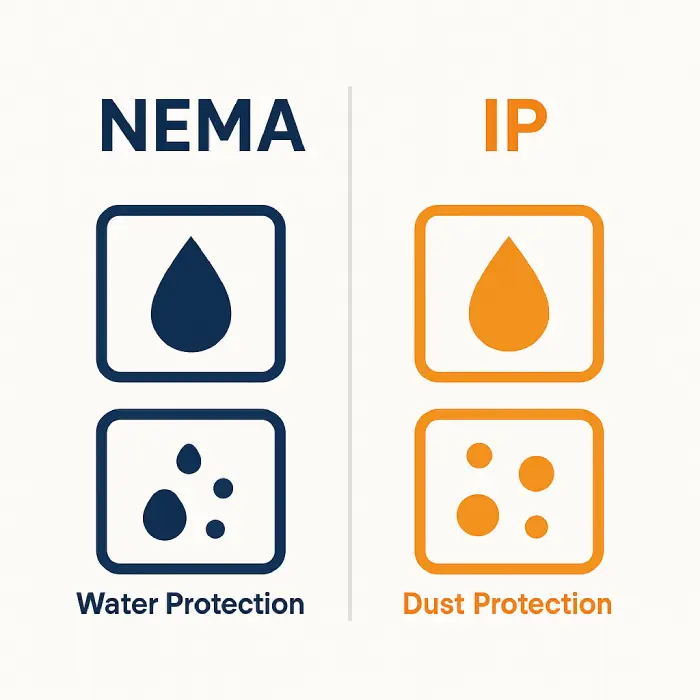
NEMA and IP ratings
FeatureNEMA RatingsIP Ratings
StandardNorth AmericaInternational
Protection ScopeEnvironmental + operational conditionsJust ingress protection
Corrosion RatingIncluded (e.g., NEMA 4X)Not specified
Common UsesIndustrial, commercialConsumer electronics

Example: A NEMA 4X enclosure offers the same water/dust protection as IP66 plus corrosion resistance.


📊 NEMA Ratings Chart 

Here's the complete breakdown of common NEMA types:

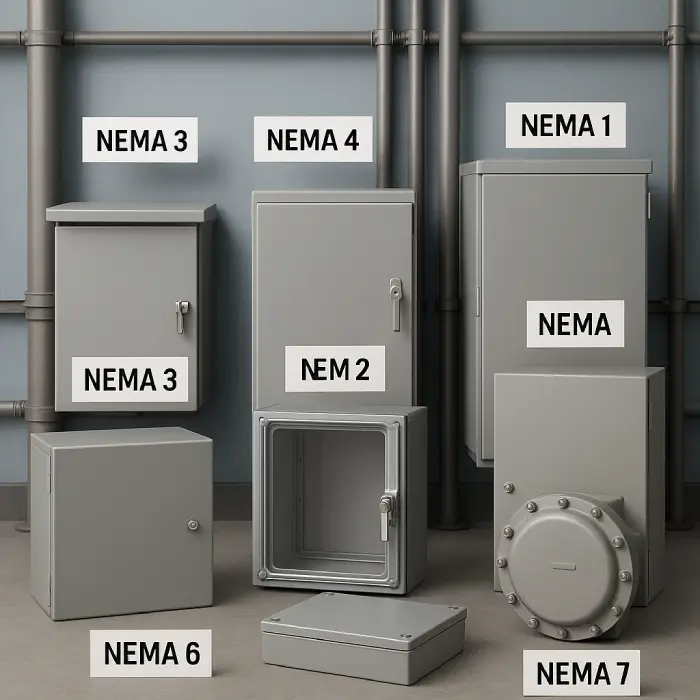
TypeProtection LevelCommon ApplicationsMaterial Suggestions
NEMA 1Basic dust protectionIndoor control panelsCarbon steel
NEMA 3RRain, sleet, dustOutdoor meters, signsGalvanized steel
NEMA 4Hose-resistant, dust-tightCar washes, food plantsStainless steel
NEMA 4X4 + corrosion proofMarine, chemical plants316 stainless
NEMA 6Temporary submersionPumps, flood zonesFiberglass
NEMA 12Dust/oil/coolant resistantMachine shops, factoriesPolycarbonate
NEMA 7Explosion-proofOil refineries, minesCast aluminum

Different NEMA enclosures

🧠 How to Select the Perfect NEMA Enclosure 

Step 1: Assess Your Environmental Threats

Ask these key questions:

  1. Will the enclosure face liquid exposure? (Rain, washdown, submersion)
  2. Is corrosion a concern? (Saltwater, chemicals)
  3. Are there explosion risks? (Flammable gases/dust)
  4. What temperature extremes will it endure?

Step 2: Match Threats to NEMA Ratings

ThreatMinimum NEMAIdeal NEMA
Light indoor dust112
Outdoor rain3R4
High-pressure washdown44X
Chemical exposure4X4X (fiberglass)
Temporary flooding66P

Step 3: Material Selection Guide

  • Stainless Steel (304/316): Best all-around for harsh environments
  • Fiberglass: Chemical resistance, non-conductive
  • Polycarbonate: Impact resistance, good for visual inspections
  • Carbon Steel: Budget option for dry locations

⚠️ 5 Costly Mistakes to Avoid

  1. Using indoor enclosures outdoors (NEMA 1 in rain = rust in months)
  2. Ignoring gasket quality (Even NEMA 4X fails with bad seals)
  3. Choosing wrong material (Aluminum corrodes near saltwater)
  4. Overlooking ventilation needs (Causes condensation buildup)
  5. Assuming all NEMA 4X are equal (304 vs 316 stainless matters)

❓ NEMA Ratings FAQ 

Q: Can I use a NEMA 12 enclosure outdoors?

A: No - NEMA 12 only protects against dust/oil. Use NEMA 3R or 4 for outdoor applications.

Q: What's the difference between NEMA 4 and 4X?

A: Both are waterproof, but 4X adds corrosion resistance (critical for marine/chemical environments).

Q: How often should NEMA enclosures be inspected?

A: Quarterly for harsh environments, annually for mild conditions. Check seals and corrosion.


🛒 Recommended Enclosures by Application

Industrial Control Panels:
✓ Hoffman A4C Stainless NEMA 4X
Marine Applications:
✓ Rittal SK 3246 NEMA 4X
Budget Indoor Use:
✓ Hammond NEMA 1 Carbon Steel

(These affiliate links help support our content while getting you quality products)


📝 Final Checklist Before Purchasing

Before ordering your enclosure:

  1. Verified NEMA rating matches your threats
  2. Chosen appropriate material
  3. Confirmed proper size with room for heat dissipation
  4. Checked mounting requirements
  5. Validated agency certifications (UL, CSA)

🔚 Key Takeaways

Understanding NEMA ratings helps you:

  • Prevent equipment failures from environmental damage
  • Meet safety regulations and avoid violations
  • Save money by buying the right enclosure the first time

Need more help? Download our free NEMA Selection Worksheet or contact our experts for project-specific advice.

(📢 Pro Tip: Bookmark this page - we regularly update it with new enclosure recommendations and industry insights!)

The Ultimate Guide to Choosing the Best Panelboard for Your Commercial Building


How to Choose the Right Panelboard for Your Commercial Project (Cost + Sizing Tips)

Choosing the right panelboard for your commercial project is crucial for safety, efficiency, and cost-effectiveness. Whether you're upgrading an existing system or installing a new one, selecting the correct panelboard ensures reliable power distribution and compliance with electrical codes.

Commercial electrician installing a panelboard in a business facility.

In this guide, we’ll cover:
✔ Key factors in selecting a commercial panelboard
✔ How to size a panelboard correctly
✔ Cost considerations and budgeting tips
✔ Common mistakes to avoid

Let’s dive in!


1. Understanding Panelboards and Their Role in Commercial Buildings

What Is a Panelboard?

A panelboard is a critical component of an electrical distribution system, housing circuit breakers or fuses that control power flow to different circuits in a building.

Why Choosing the Right Panelboard Matters
  • Safety: Prevents overloads and electrical fires.
  • Efficiency: Ensures optimal power distribution.
  • Compliance: Meets NEC (National Electrical Code) requirements.
  • Scalability: Allows for future expansions.

2. Key Factors to Consider When Choosing a Panelboard

A. Electrical Load Requirements

Before selecting a panelboard, calculate your building’s total electrical load. Consider:

Pro Tip: Hire an electrical engineer for precise load calculations.

B. Panelboard Types: Main Breaker vs. Main Lug
C. Voltage and Phase Requirements
D. Number of Circuits Needed

Estimate the number of circuits required based on:

  • Current needs
  • Future expansions
E. Space and Mounting Options

3. How to Size a Panelboard for Your Commercial Project

Step 1: Calculate Total Electrical Load

Add up the wattage of all connected devices and apply the 80% rule (NEC requirement) to avoid overloading.

Formula:
Total Load (Amps) = Total Wattage / Voltage

Step 2: Determine Panelboard Amperage Rating

Choose a panelboard with a capacity 20-25% higher than your calculated load for safety.

Step 3: Account for Future Expansion

Select a panelboard with extra slots for additional circuits.


4. Cost Breakdown: How Much Does a Commercial Panelboard Cost?

Panelboard TypeAverage Cost (USD)
100-Amp Main Breaker Panel$200 – $500
200-Amp Main Breaker Panel$500 – $1,200
400-Amp Three-Phase Panel$1,500 – $3,500
Custom/Industrial Panelboards$4,000+

Additional Costs:


5. Common Mistakes to Avoid When Choosing a Panelboard

❌ Underestimating Load Capacity → Leads to tripped breakers and system failures.
❌ Ignoring Future Expansion → Requires costly upgrades later.
❌ Choosing the Wrong Enclosure Type → Outdoor panels need weatherproofing.
❌ Skipping Professional Help → Improper sizing can violate NEC codes.


6. Final Tips for Selecting the Best Panelboard

✔ Consult an electrician for accurate load calculations.
✔ Prioritize safety features like surge protection and GFCI breakers.
✔ Compare brands (Siemens, Square D, Eaton) for reliability.
✔ Plan for future growth to avoid frequent upgrades.


Conclusion

Choosing the right panelboard for your commercial project ensures safety, efficiency, and compliance. By considering load requirements, sizing correctly, and budgeting wisely, you can avoid costly mistakes and ensure a reliable electrical system.

Need help selecting the best panelboard? Contact an electrical expert today!

How to Choose Offshore Oil Rig Enclosures

 How to Choose Offshore Oil Rig Enclosures: 2025 Selection Guide

The North Sea was churning with 40-foot swells when Platform Alpha's main control panel failed. Salt spray had penetrated a substandard enclosure, triggering a cascade of electrical failures that could have cost millions—and lives. This nightmare scenario plays out more often than the industry admits. It all comes down to one critical decision: choosing the right offshore oil rig enclosures. In the unforgiving marine environment where oil rigs operate, your panel board isn't just about protecting equipment. It's about preventing catastrophic failures that can shut down operations, endanger personnel, and devastate your bottom line.

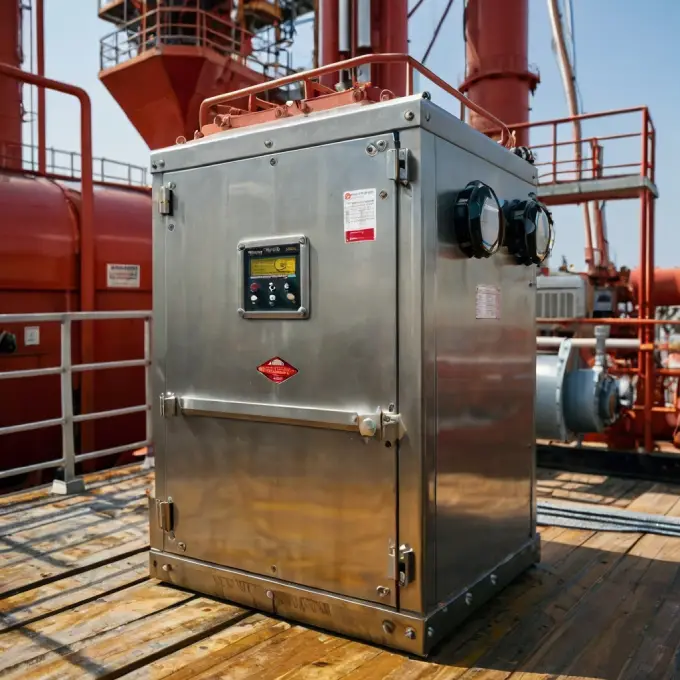
Offshore oil rig enclosures protecting critical equipment from harsh marine environment

Why Offshore Oil Rig Enclosures Are Mission-Critical

Every piece of electrical and control equipment on your offshore platform faces a relentless assault from saltwater, extreme temperatures, explosive atmospheres, and hurricane-force winds. Standard industrial enclosures that work perfectly onshore become death traps in marine environments.

The stakes couldn't be higher. A single enclosure failure can trigger:

  • Complete platform shutdown costing $500,000+ per day
  • Safety system failures endangering crew lives
  • Environmental disasters with billion-dollar consequences
  • Regulatory violations and potential criminal liability

The 7 Non-Negotiable Factors for Offshore Oil Rig Enclosures

Explosion-proof offshore oil rig enclosure with corrosion-resistant coating
1. Explosion-Proof Certification: Your First Line of Defense

In the volatile atmosphere of offshore drilling, any electrical spark can trigger a devastating explosion. Your offshore oil rig enclosures must carry proper certifications:

  • ATEX (Europe): Mandatory for EU waters
  • IECEx (International): Global standard acceptance
  • Class I Division 1: North American hazardous locations

Look for enclosures rated for Zone 1 (gas) and Zone 21 (dust) environments. The certification marking should be clearly visible and include the specific gas groups your platform encounters.

2. Corrosion Resistance: Fighting the Saltwater Siege

Marine environments are brutally corrosive. Salt spray accelerates metal degradation at rates that would shock onshore engineers. Your enclosure materials must withstand this chemical warfare:

Winning Materials:

Death Sentence Materials:

  • Carbon steel (rusts within months)
  • Standard aluminum (pits and corrodes)
  • Painted steel (coating fails, exposing substrate)
3. Ingress Protection: Sealing Out Destruction

Water ingress is the silent killer of offshore electronics. Your offshore oil rig enclosures need military-grade sealing:

Pay special attention to cable entries, door seals, and ventilation systems. A single weak point compromises the entire enclosure.

4. Structural Integrity: Surviving Nature's Fury

Offshore platforms endure forces that would flatten buildings. Your enclosures must be engineered fortresses:

Wind Load Requirements:

  • Design for 150+ mph sustained winds
  • Account for dynamic loading and fatigue
  • Consider ice loading in northern waters

Seismic Considerations:

  • Platform movement and vibration
  • Shock loading from wave impact
  • Thermal expansion cycling
5. Temperature Management: Beating the Heat and Cold

Offshore environments subject equipment to extreme temperature swings. Electronics generate internal heat while external conditions range from arctic cold to desert heat:

Cooling Solutions:

  • Heat Exchangers: Sealed cooling without contamination risk
  • Thermoelectric Coolers: Precise temperature control
  • Natural Convection: Passive cooling for smaller loads

Heating Requirements:

  • Prevent condensation in cold conditions
  • Maintain minimum operating temperatures
  • Anti-condensation heaters for humidity control
6. Access and Maintenance: Keep It Running

Offshore maintenance windows are limited and expensive. Your enclosure design must facilitate rapid, safe maintenance:

  • Quick-Release Latches: Fast access in emergencies
  • Internal Lighting: Work safely in confined spaces
  • Cable Management: Organized, accessible wiring
  • Lifting Points: Safe handling of heavy enclosures
7. Regulatory Compliance: Avoiding Legal Nightmares

Offshore operations face multiple regulatory jurisdictions. Your offshore oil rig enclosures must satisfy all applicable standards:

International Standards:

  • IEC 60079 (Explosive atmospheres)
  • ISO 12944 (Corrosion protection)
  • IEC 60529 (IP ratings)

Regional Requirements:

  • API standards (Americas)
  • NORSOK (North Sea)
  • DNV GL certification

Choosing Your Enclosure Partner: The Make-or-Break Decision

Not all enclosure manufacturers understand offshore requirements. Look for partners with:

  • Offshore Experience: Track record on drilling platforms
  • Engineering Support: Custom design capabilities
  • Global Service: Support wherever you operate
  • Quality Certifications: ISO 9001, AS9100, or equivalent

The Cost of Getting It Wrong

Consider Platform Bravo's experience: cheap enclosures saved $50,000 upfront but cost $2.3 million in failed equipment, emergency shutdowns, and regulatory fines within 18 months. The "expensive" marine-grade alternatives would have paid for themselves in preventing downtime alone.

Your Next Move: Secure Your Platform's Future

Every day you delay upgrading substandard enclosures, you're gambling with catastrophic failure. Start your offshore oil rig enclosures evaluation now:

  1. Audit Current Equipment: Identify vulnerable enclosures
  2. Assess Risk Levels: Prioritize critical systems
  3. Engage Qualified Suppliers: Get expert recommendations
  4. Plan Replacement Strategy: Minimize operational disruption

The ocean doesn't give second chances. Neither should your enclosure selection process.

Your platform's survival depends on the protection you choose today. Make it count.


Need expert guidance on offshore oil rig enclosures? Contact our marine specialists for a comprehensive platform assessment and customized protection solutions.